
As Rwanda continues investing in sustainable transportation and green technology, developing the technical skills required to support the country’s growing e-mobility sector remains a priority. To contribute to this vision, UR UniPod, in partnership with industry experts from Xiji Solar and GreenBridge Solutions, delivered a practical e-mobility training program that enabled students to move beyond theory and gain real-world engineering experience.
The program brought together students from engineering disciplines and immersed them in the fundamentals of electric mobility technologies through a combination of technical instruction, practical workshops, and collaborative project-based learning. The objective was not only to introduce participants to electric vehicle systems but also to provide an opportunity to apply engineering concepts through hands-on assembly and testing activities.
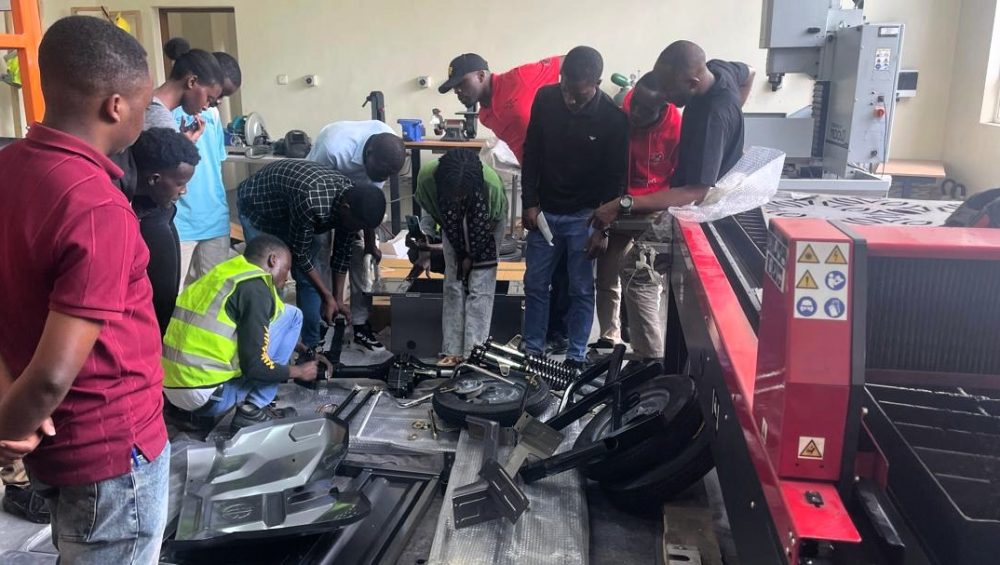
A major milestone of the training was the successful assembly and testing of a three-wheel electric vehicle by the participating students. Working alongside technical experts, students were actively involved in understanding vehicle components, assembling key systems, integrating electrical and mechanical parts, and conducting functional testing of the completed prototype. This practical experience allowed participants to develop a deeper understanding of how electric mobility systems operate in real-world applications.
The successful completion of the three-wheel electric vehicle demonstrates the value of experiential learning in engineering education. Rather than limiting learning to classroom theory, students were able to engage directly with modern e-mobility technologies, strengthening their technical competence, problem-solving abilities, and confidence in working with emerging transportation systems.
Beyond the technical achievement, the project highlights the growing capacity of young Rwandan engineers to contribute to the country’s green transition. As demand for electric vehicles continues to increase, local expertise in vehicle assembly, maintenance, and innovation will play an essential role in supporting the sustainability and growth of the sector.
The training also strengthened collaboration between academia and industry by providing students with access to industry experts, practical equipment, and real-world engineering challenges. Such partnerships help bridge the gap between education and employment while ensuring graduates are equipped with skills that respond to evolving market needs.
For UR UniPod, the successful assembly of the electric three-wheeler reflects its broader mission of fostering innovation through hands-on learning, digital fabrication, and technology-driven problem-solving. The achievement demonstrates how makerspaces and innovation hubs can serve as platforms where students transform knowledge into practical solutions with tangible impact.
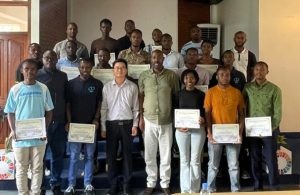
As the first cohort completes the program, the assembled electric vehicle stands as more than a training project—it is a symbol of the skills, creativity, and innovation potential of Rwanda’s next generation of engineers. Through initiatives like this, young innovators are gaining the experience needed to help build a cleaner, smarter, and more sustainable transportation future for Rwanda.